Exam Duration and Difficulty
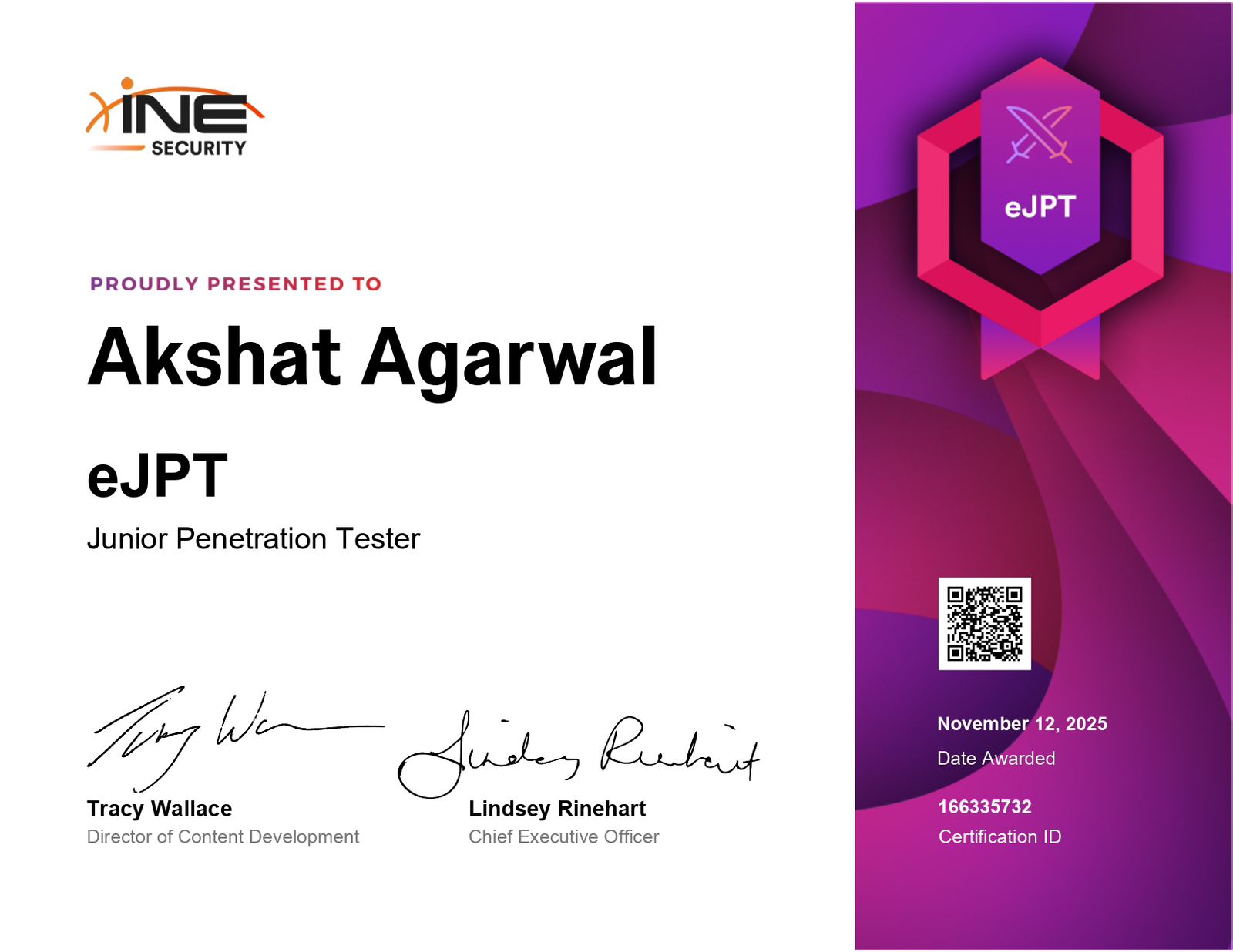
I recently cleared the eJPT (eLearnSecurity Junior Penetration Tester) exam, and overall, it was a very solid learning experience. I completed the exam in about 35 hours, including sleep. While it wasn’t extremely hard to pass, I wouldn’t call it easy either. I’d place it somewhere between intermediate and hard, especially if you’re completely new to penetration testing.

More About Penetration Testing Than Web Apps
One thing that surprised me was that the exam is not very focused on web application penetration testing. There is some web-related work, but most of the exam feels more like real-world network and system-level penetration testing. You spend more time enumerating services, exploiting misconfigurations, moving through systems, and understanding how different parts of the network connect, which I personally enjoyed a lot.
Why I Recommend eJPT to Beginners
For beginners who want to enter offensive security, I would definitely recommend giving eJPT a try. It forces you to understand fundamentals instead of just memorizing tools. That said, one thing I strongly suggest is keeping your own notes while learning. Not just random screenshots, but an actual personal guide with frequently used commands, techniques, and small explanations. During the exam, those notes become incredibly useful and also help you build habits that matter later for higher-level certifications.
Training Content: Too Much, but Still Useful
The training content for eJPT is quite large, and at times it can feel unnecessary or overwhelming. Some tools and topics might seem like overkill at first, but in hindsight, that broad exposure is actually useful. It introduces you to a wide range of techniques that later certifications like OSCP expect you to already be comfortable with. Even if you don’t master everything, you at least know what exists and when to try it.
Using eJPT Knowledge in CTFs and Real Practice
Right now, I’m actively using the same knowledge from eJPT while solving CTF challenges on TryHackMe. The concepts of enumeration, privilege escalation, and lateral thinking carry over really well, and I can clearly see improvement in how I approach machines compared to before. It doesn’t feel like random guessing anymore — it feels like structured problem solving.
Final Thoughts
Overall, eJPT gave me confidence that I’m on the right track in penetration testing. It didn’t magically make me an expert, but it built a strong foundation and pushed me to think like a pentester instead of just running tools. For anyone serious about starting a career in offensive security, it’s a good checkpoint to test both your skills and your mindset.